Videos & Images


La traviata Synopsis
Act I: Paris
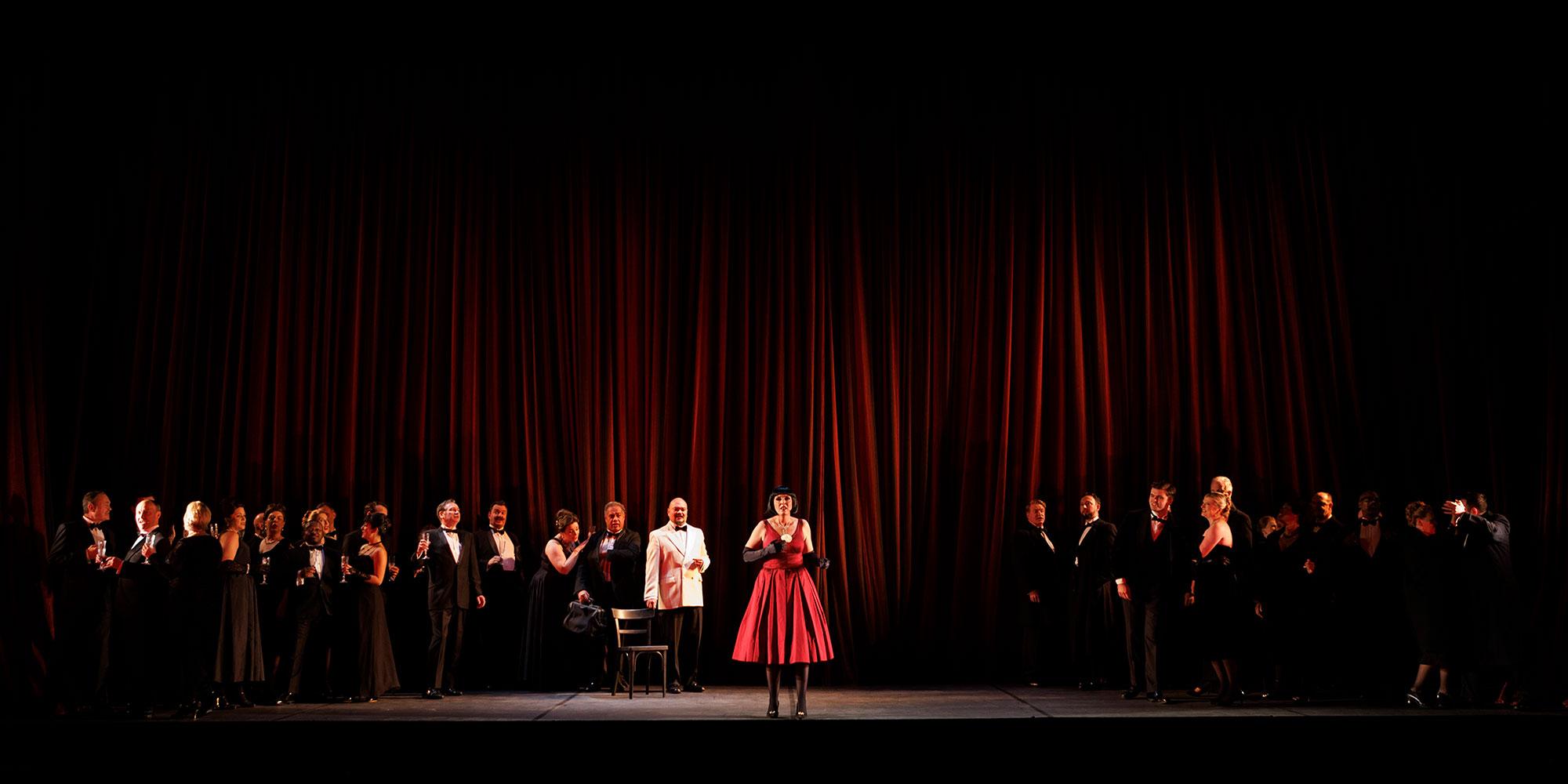
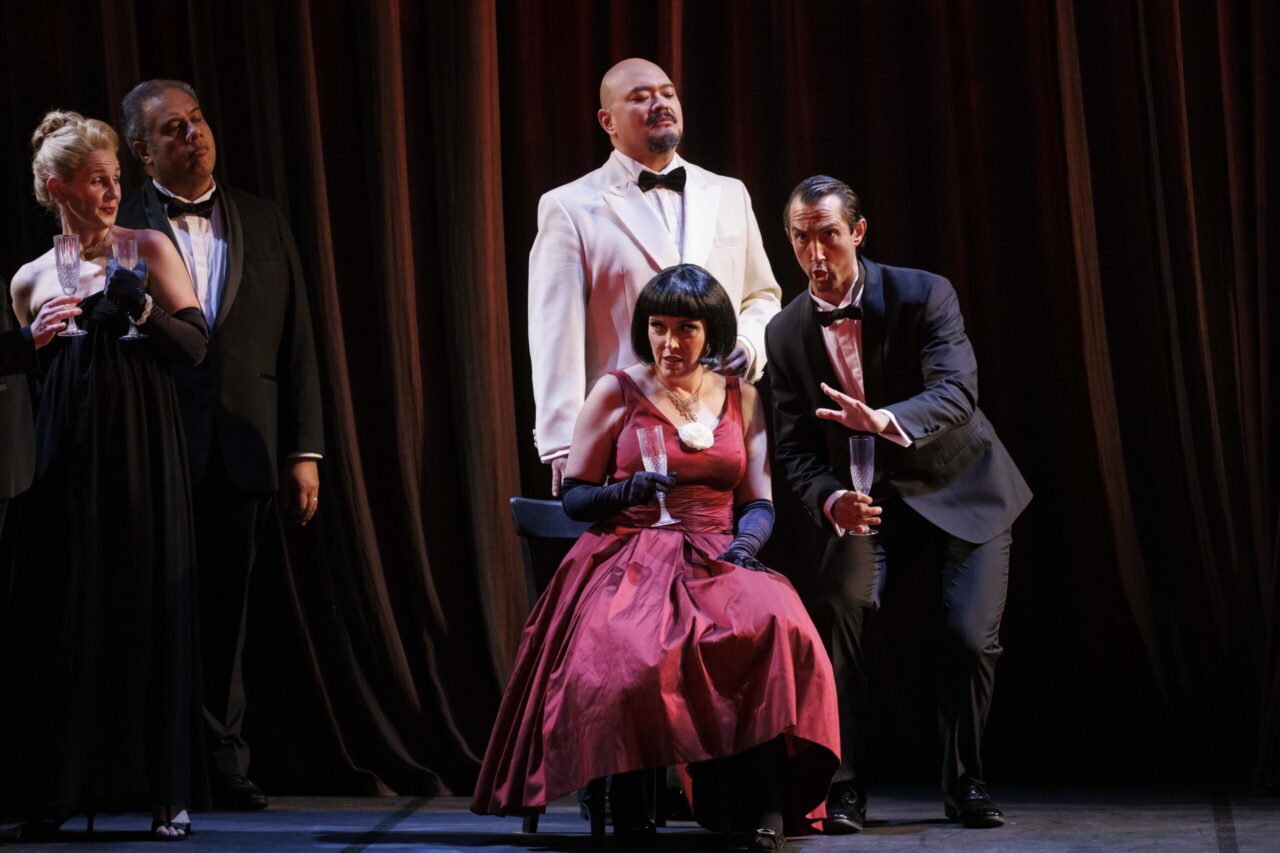
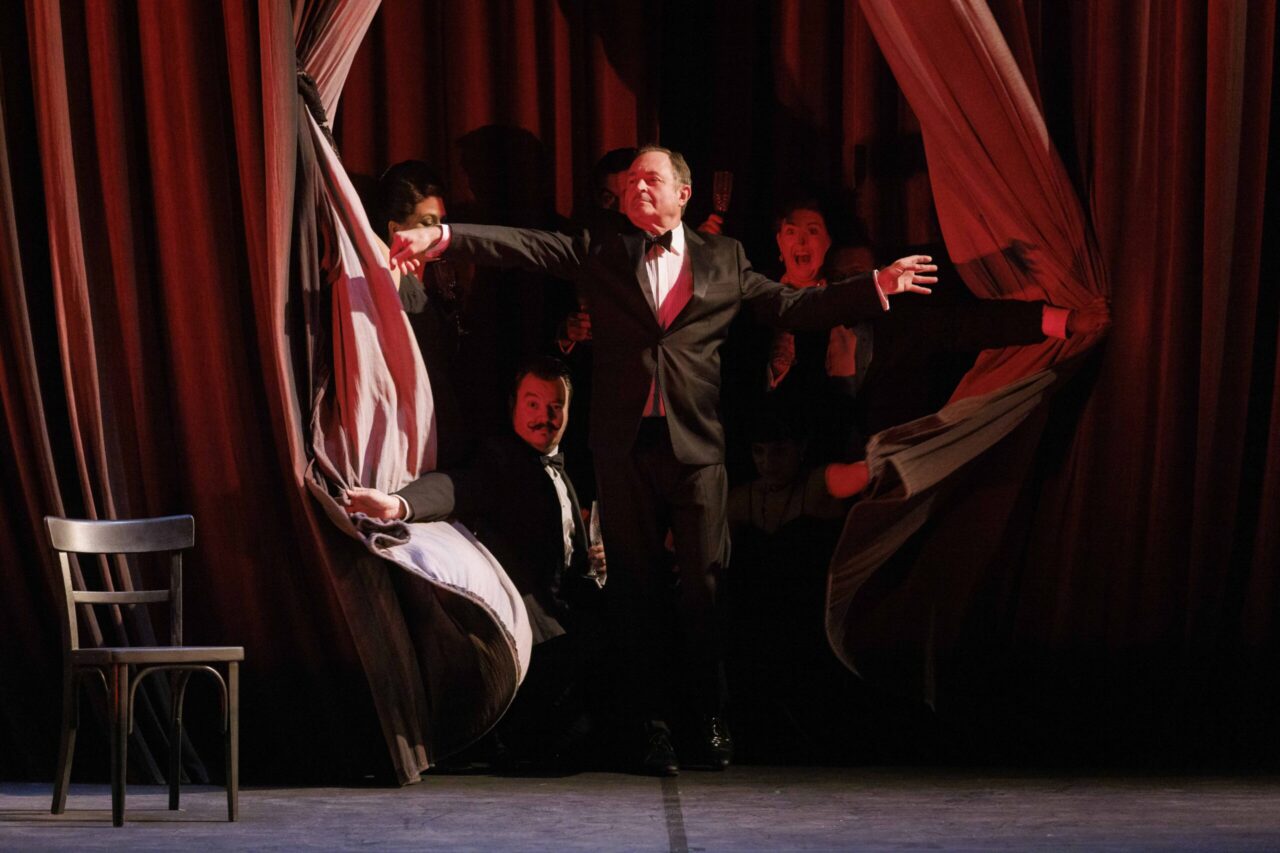
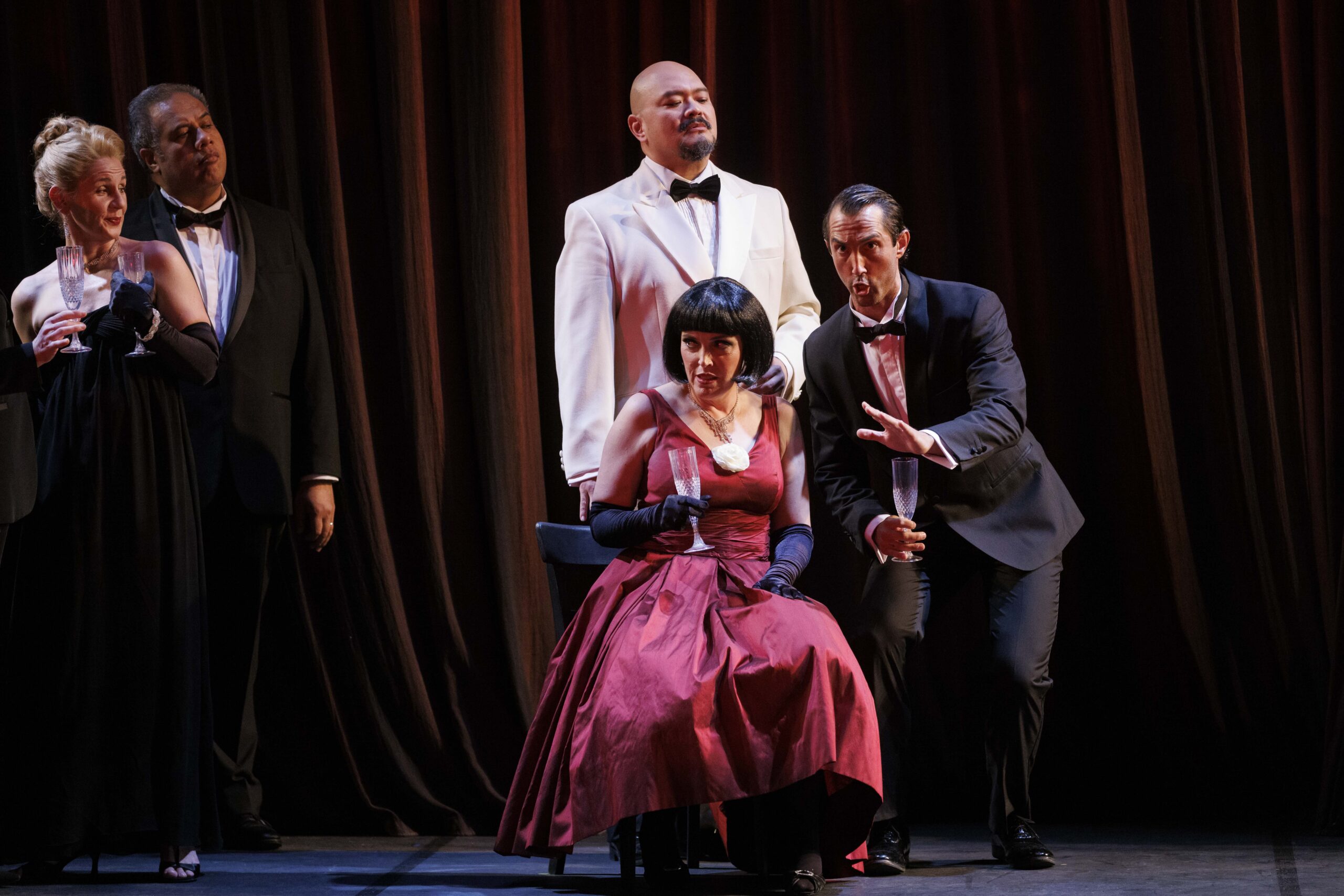
Violetta Valéry, a courtesan of renown desire, is hosting a lavish party with the upper-class gentlemen of Paris and her fellow courtesans, all funded by her admiring patron, Baron Douphol. Amidst the champagne, she is introduced to a middle-class gentleman, Alfredo Germont, who has been in love with her for over a year, since her illness began. Alfredo is pressured to give a toast, and Violetta joins him, urging everyone to enjoy life’s fleeting pleasures.
As the guests retire to other rooms, Violetta suddenly grows ill. While left alone with Violetta, Alfredo protests his love, which she discourages at first, but then accepts in a sudden reversal. As dawn breaks, the gentlemen must all go home, and Violetta is left alone to contemplate the idea of having a true love for herself. Instead, she resolves to plunge herself headlong into the vortex of hollow pleasures that make up her existence.
Act II
Scene 1: A house in the country, three months later
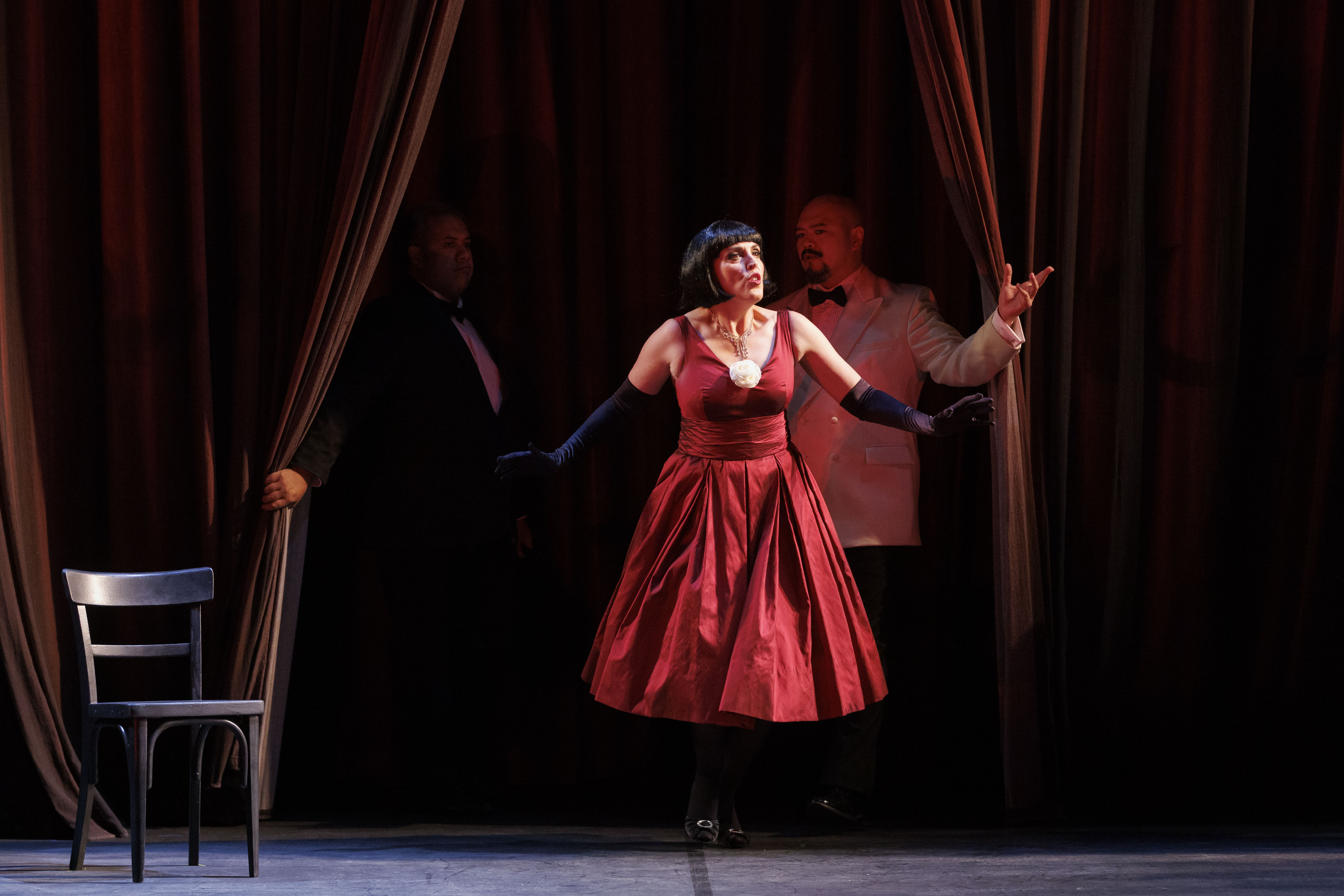
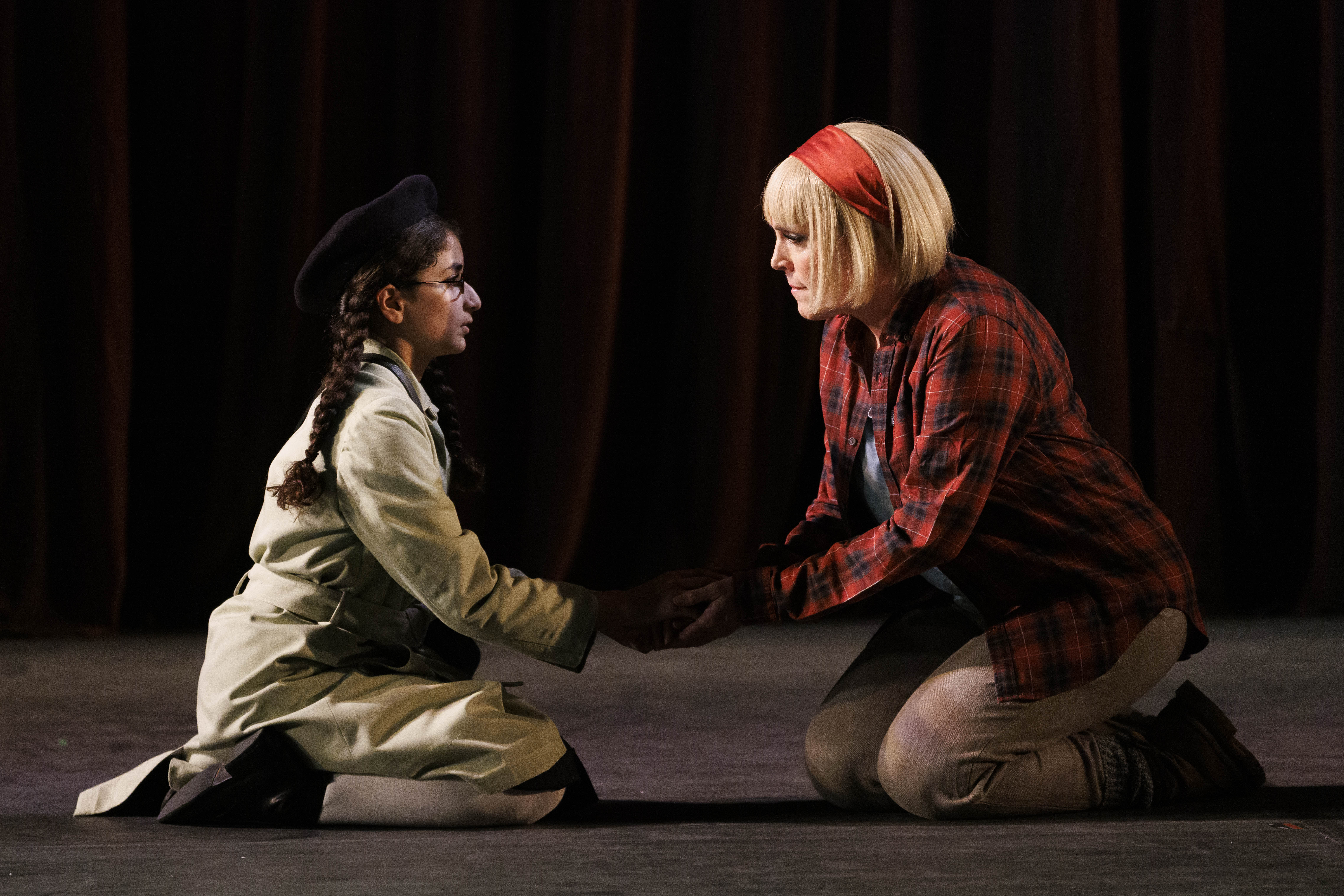
Violetta and Alfredo are now living together in the idyllic countryside. When Alfredo learns from Violetta’s servant, Annina, that she has sold her possessions to support the life they lead, he returns to the city to raise the necessary funds. In his absence, Violetta receives an unexpected visit from Alfredo’s father, Giorgio Germont. He begs her to end their relationship; otherwise, his daughter’s marriage into a respectable family will be threatened.
After a relentless breakdown of her character, Violetta agrees to sacrifice her love – despite it breaking her will to live. Germont leaves, and Violetta writes a farewell note to Alfredo: she will return to the city and to Douphol’s patronage. Alfredo returns, and Violetta arranges for him to be given the note after she has gone. When he reads it, he refuses the consolation of his father (who has been watching from nearby) and rushes back to the city to avenge himself.
Scene 2: Paris, that same night
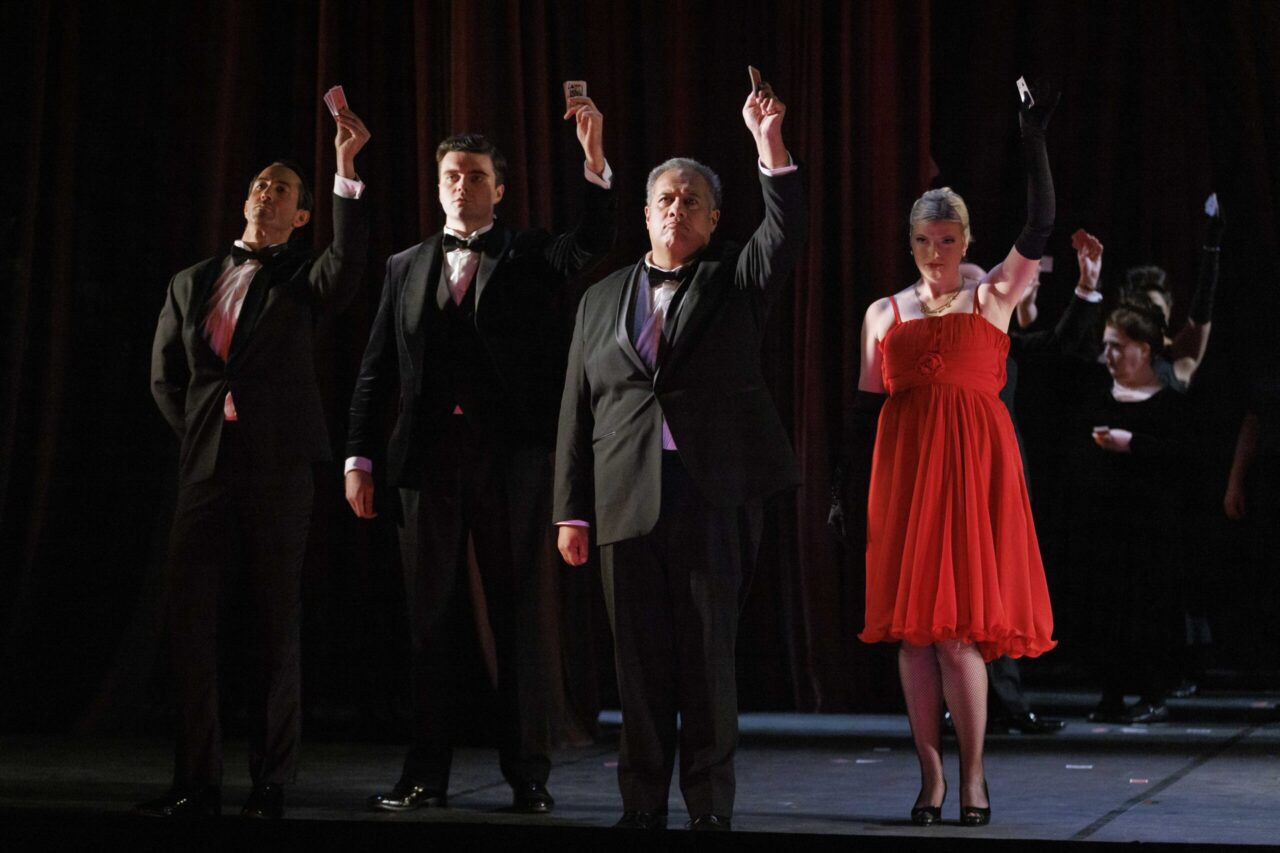
A party is in progress, enlivened by a masque of gypsies and bullfighters. Alfredo appears alone and witnesses Violetta on the arm of Douphol. The two men play an aggressive round of cards, which Alfredo wins. When she has an opportunity, Violetta speaks to Alfredo alone and begs him to leave and avoid a deadly fight with Douphol; pressed by Alfredo, she maintains her promise to Alfredo’s father and tells Alfredo that she loves Douphol. In a fury, Alfredo summons the guests to witness the repayment of his debts as he flings his winnings at her. Germont enters in time to witness his son’s outburst and shames him. Alfredo must leave the party – and Violetta.
Act III: Violetta’s bedroom, a few months later
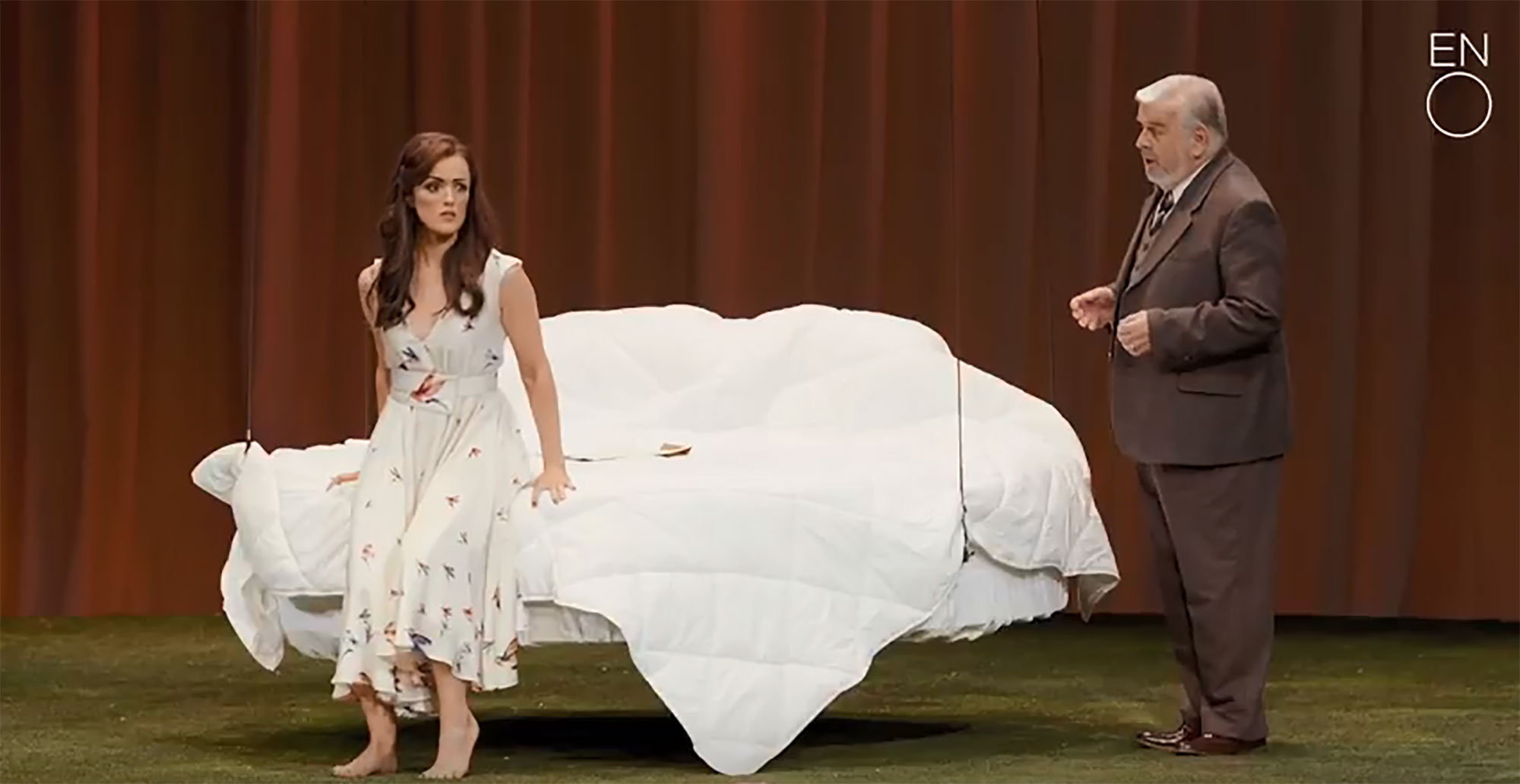
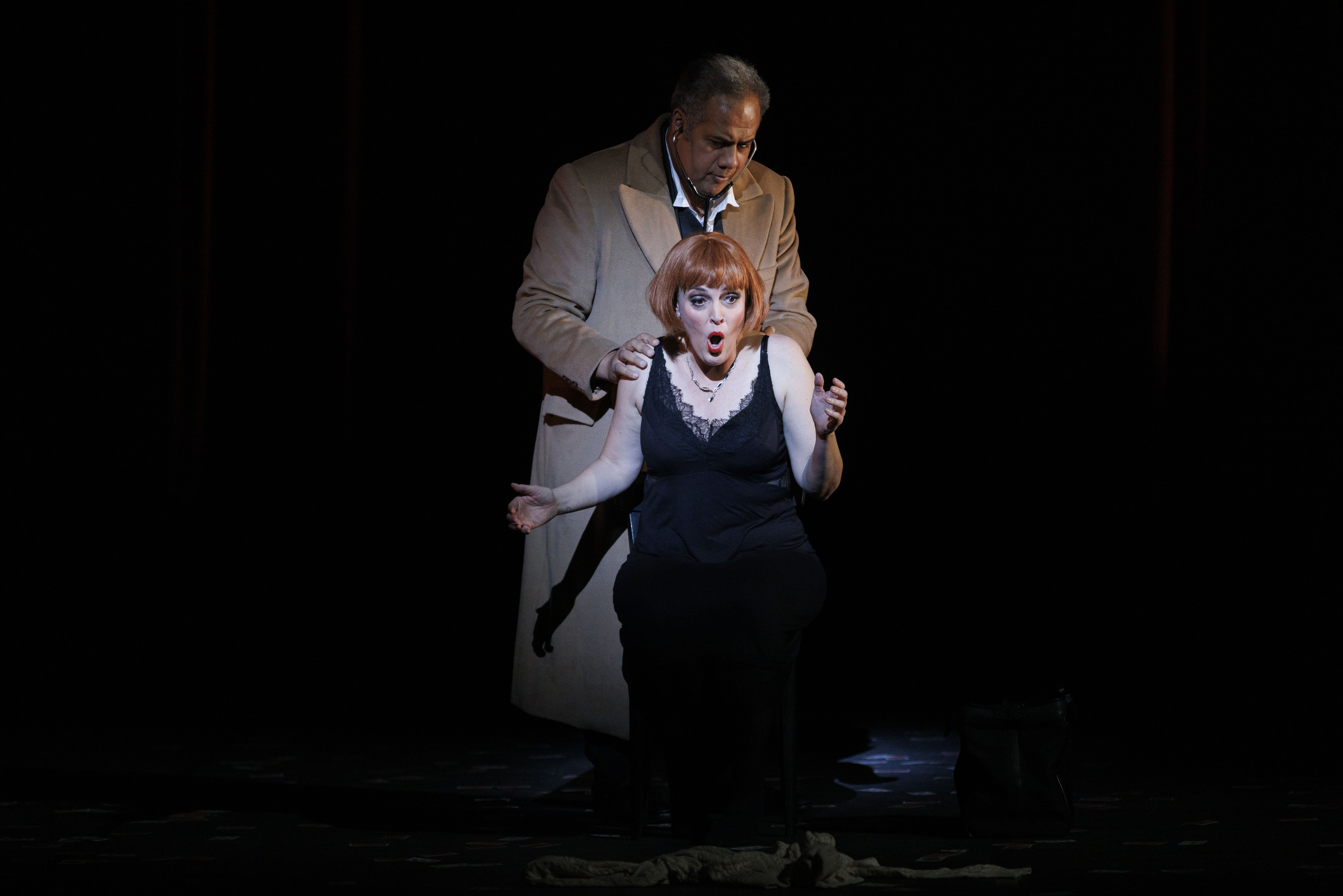
Doctor Grenvil tells Annina that her mistress will soon die. Violetta instructs Annina to give what little money they have left to the poor and re-reads a letter from Germont telling her that Alfredo now knows of her sacrifice and is returning to beg her forgiveness. She believes it is now too late for a reunion with Alfredo. She bids farewell to all her hopes and prays to be released from this suffering. The sounds of a carnival in the street summon false hopes of Alfredo’s return. Then, to her astonishment, Alfredo returns to hold his beloved. Germont arrives to give his blessing, full of remorse at the pain he has caused. But it is too late.
Introduction Guide
Read our guide to Verdi’s tragic opera La traviata, including a discussion of the story, the composer and ENO’s contemporary staging.
La traviata FAQs
La traviata is a tragic opera about Violetta, a Parisian courtesan who tries to leave the life she knows for a chance at true love. When she falls for Alfredo, their relationship is threatened by family pressure, reputation and the hypocrisy of upper-class society.
At its heart, the La traviata story is about a woman trying to choose her own future in a world determined to judge her past.
La traviata is set in 19th-century Paris. The opera storyline plays out across glamorous social settings within the city, including Violetta’s Parisian home, Flora’s country house and the venues of elite gatherings where appearances matter deeply.
Yes, La traviata is loosely based on a true story. Giuseppe Verdi adapted the opera from Alexandre Dumas fils’ novel La Dame aux Camélias. Violetta was inspired by Marie Duplessis, a Parisian courtesan who died of tuberculosis at 23.
While Verdi changed names and plot details, the core narrative reflects a real world of romance, strict social codes and public scandal.
La traviata explores desire, reputation, and the conflict between personal happiness and public expectation. Through Violetta’s story, the opera questions how society treats women who don’t fit its rules. It’s also a moving portrait of a woman who is far more generous, complex and courageous than the world around her allows.
La traviata was controversial because it placed a courtesan, Violetta, at the centre of the opera and treated her with sympathy rather than judgement. For 19th-century audiences, this was provocative – especially because the story reflected contemporary life rather than a distant myth or historical setting.
Its focus on class, morality and female reputation challenged what audiences expected to see on stage.
La traviata was written by composer Giuseppe Verdi, with an Italian libretto by Francesco Maria Piave. Verdi’s opera was based on Alexandre Dumas’s play La Dame aux Camélias, which he adapted from his own novel of the same name.
Originally, Verdi considered calling the opera Violetta, after its central character. Instead, it became La traviata, a title that reflects how society sees and labels its heroine.
La traviata was written in 1853 and premiered at the La Fenice opera house in Venice later that year. Although its first performance was not a success, Verdi’s La traviata is now one of his best-known works, loved for its direct emotional pull, memorable music and unforgettable central role.
One of the most famous pieces from La traviata is “Sempre libera” (“Always Free”), Violetta’s powerful Act I aria. Another of the opera’s best-known songs is “Brindisi”, often called “The Drinking Song”, a lively chorus where the characters toast to life and love.
These famous arias from La traviata show two sides of Verdi’s music: sparkling public glamour and private emotional conflict.
The meaning of La traviata in English is often translated as “The fallen woman” or “The woman who strayed.” The title refers to Violetta Valéry, who is judged by society because of her life as a courtesan. But the opera looks beyond that label, revealing Violetta as intelligent, vulnerable and capable of extraordinary devotion.
La traviata is so famous because it combines a gripping story with some of Giuseppe Verdi’s most expressive music. Its characters feel immediate and human, while its arias and ensembles are some of the most recognisable in opera.
From the brilliance of “Sempre libera” to the warmth of “Brindisi”, La traviata’s songs capture both the glamour of Parisian society and the heartbreak behind it.
Yes, Baz Luhrmann’s 2001 film Moulin Rouge! is heavily inspired by La traviata. Both stories centre on a glamorous courtesan who falls in love with a young man, with illness, jealousy and money adding pressure to the relationship.
While Moulin Rouge! isn’t a direct retelling, it echoes the La traviata plot through its bohemian setting, doomed romance and theatrical world.
Pretty Woman is not a direct adaptation of La traviata, but the two stories share some similarities. Both feature a romance between a woman judged by society and a man from a different social world.
However, Pretty Woman is a modern romantic comedy with a hopeful ending, while La traviata is a tragic opera shaped by illness, family pressure and the strict codes of respectable society.
Violetta Valéry is the central character in La traviata. She is a beautiful and sophisticated Parisian courtesan who appears confident and independent, but is also vulnerable, lonely and seriously ill. Her love for Alfredo offers the possibility of a new life, but the expectations placed on her by others force her into a devastating choice. Violetta’s journey gives the opera its emotional power.
No, Il trovatore and La traviata are different operas, though both were written by composer Giuseppe Verdi. La traviata tells the story of Violetta, a Parisian courtesan, and explores reputation, romance and personal freedom. Il trovatore is a darker, more dramatic opera with a plot involving revenge, mistaken identity, family secrets and political conflict.
Both are among Verdi’s best-known works, but they have very different stories, characters and musical worlds.
Related Content


The Beginner’s Guide to Verdi
